Our Services
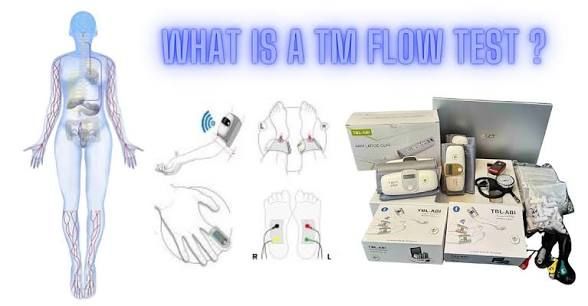
Key Features & Benefits of ABI ANYWHERE with the TM-Flow System
Multi-Function Screening:
Efficiently assess ABI for Peripheral Arterial Disease (PAD) risk, sudomotor function for insights into small fiber neuropathy, and Heart Rate Variability (HRV) for an overview of autonomic balance – all with one device.
Aid in Early Detection:
Our testing provides valuable data that can help in the early identification of potential vascular and autonomic issues, allowing for timely patient management.
Rapid & Efficient Testing
Our assessment in approximately 7-12 minutes, making it ideal for busy independent practice environments and annual wellness visits.
Non-Invasive & Patient-Friendly:
ABI Anywhere ensures patient comfort with a gentle testing procedure, promoting acceptance of necessary screenings.
Billingesting is generally reimbursable under established CPT codes (e.g., 95921, 93923, 95923) Our specialist can walk you through the entire process.

ABI
Peripheral Artery Disease
ABI Anywhere uses a more complete evaluation of PAD than a traditional ABI test. The 3 areas monitored by a TM FLOW are sudomotor testing, autonomic nervous system (ANS) and the ABI. The sympathetic and parasympathetic system is evaluated by the ANS test. These two parts of the ANS system play a key role in controlling the human circulatory system. The health of the small nerve fibres that control the sweat glands is reviewed by the sudo motor test.
The test provides a more comprehensive evaluation of PAD as, unlike the ABI, the TM Flow addresses factors beyond the blood flow in the lower extremities. The ABI is not always accurate in individuals with severe PAD or in those individuals with calcified arteries.
We measure the blood flow at the capillary level, which allows the test to allow a more accurate assessment of the microvascular perfusion in the extremities. This helps the clinician to more accurately identify patients with more severe PAD and who may be at risk of additional complications.
Being able to measure flow in real-time, the TM Flow can measure the velocity of blood flow and fluctuation in blood pressure in real time. This can allow the TM Flow to assess the impact of exercise and body posture on the flow of blood. This can be helpful to the clinician to identify early stages of PAD and to monitor how well treatment protocols are working with the patient.
ph
Autonomic Nervous System Assessment
New Title
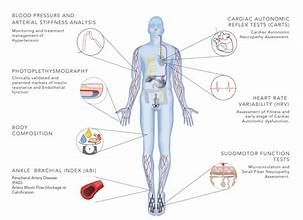
ABI Anywhere's testing is a comprehensive assessment that evaluates several aspects of ANS function, including blood pressure variability, skin perfusion, and sweat secretion. The test includes three components: Ankle-Brachial index (ABI) testing, ANS assessment, and sudomotor testing. The integration of these three methods allows for a more precise assessment of ANS activity compared to single-modality tests.
The foremost advantage of the TM Flow over other ANS tests is its ability to identify specific patterns of ANS dysfunction. This info can then be used to develop bespoke treatment plans for the patients. The result of the test can also be used to changes in ANS function over time and determine the effectiveness of treatments.
Sudomotor
Neuropothy Testing
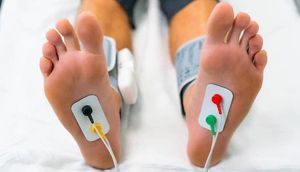
Sudomotor tests are diagnostic procedures aimed at evaluating the sweat glands’ functionality and sweat production in response to various stimuli. This test provides insights into the Autonomic Nervous system and automatic functions in the body like blood pressure, heart rate and sweating.
Sudomotor tests are often helpful for clinicians to create a medical diagnosis. These tests are useful in diagnosing various medical conditions such as diabetic peripheral neuropathy, diabetes, Parkinson’s disease, multiple scleroses, and others. In addition, sudomotor tests can provide information about the severity and progression of these conditions and can be used to monitor the efficacy of treatments. Furthermore, these tests are noninvasive and don’t involve radiation, making them a safe and effective diagnostic tool for physicians to consider in their patient evaluations.
What You Recieve
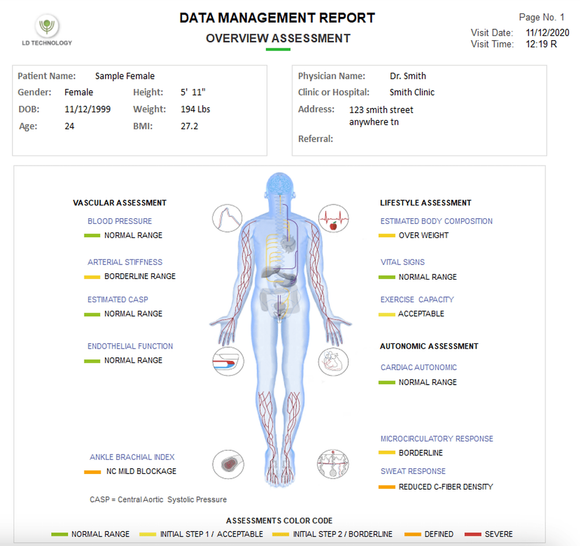
- Each Provider recieves an easy-to-read overview with the patient's name on the report. The output can be classified with different colours, similar to traffic signal which turns green, yellow, and red to indicate different actions. The clinician can use this as an effective way to communicate and SHOW the patient's areas of concern. If the patient SEES the information on their report, they often understand that there could very well be a challenge on the horizon that needs a plan. For the practitioner, this can help create urgency for a better pathway toward health and wellness.
Here is an example report. It is an easy-to-review, at-a-glance report: